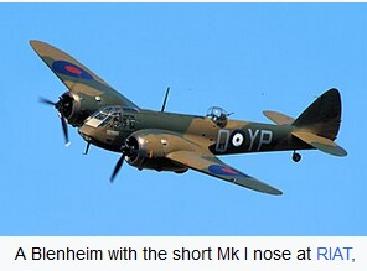
When war broke out in England in 1939 I was employed by the Hammersmith Borough Council in the Accounts department. Because of my employment I could not be called or volunteer for war service at the beginning of the war. This obviously had to be relaxed as the war became more serious and more men and women were reqiured for the Services. I wanted to be a pilot but my age was against me as I was twenty eight years old. Young men from Canada, Australia and New Zealand as well as England were being trained as pilots and were supplying all that was required at the beginning. In July 1940 I was released so I went for an interview with three senior R.A.F. Officers. As I had expected I applied to be a pilot but was told that I would have to go through training first as a navigator because they were urgently required as multi-engined planes were coming off the assembly plants. At the end of the interview I was told I was not suitable - the Officers were all pre-war vintage. So when I got to the door I turned to the Officers and said, “Is your decision final sirs?” They looked at me and said, “Alright, come back,” which I did. I was told that if I joined the Air Force now as an airman it would speed up the time for me to be called in. The alternative was for me to go home and wait to be called. I said that I would like to join up now. I went home and was called up soon after. I went to Blackpool and took exercise training for two weeks. Win and Sylvia came and stayed just outside Blackpool so we could be near each other. After training I was transfered to an Air Force station in Lincoln. Win and Sylvia again came and lived nearby. However, the house they were in had a thatched roof and was riddled with fleas, so they went home! Later I was called to start my initial training with navigation and went to Scarborough. When my training was complete I was appointed Pilot Officer. After two more weeks I was posted to Millom and started flying in Bothers and Ansons. Win and Sylvia came and stayed some time so that we could be close and be able to see each other. After completing the training I was posted to Hinton-in-the-Hedges to continue my training as navigator. In September came my posting as navigator with Pilot Sergeant Taylor, a Canadian, and Sergeant King as bomb aimer, a Londoner, flying a long nosed Blenheim. Next I was sent to escort an airman to London where the police wanted him for some crime. While I was in London crews were re-arranged and when I got back I found that I was to be with Sgt. Taylor. This put me in a difficult position because while we were on the ground I was his senior but in the plane he was boss. .Actually this did not cause much inconvenience and we continued our training as crew and then went to Colerne to pick up a brand new Blenheim Z7969. Our base for more training was at Bicester and this continued until November 1941. On December 5th we started off on our official War Duty. Win and Sylvia had come to stay in Bicester and knew that we could be leaving at any time. So we deliberately flew very low over the house where they were staying and we flew over three times. We could see them very clearly.and could see them waving us farewell. Our plane flew to Port Reath in Cornwall which was our jumping-off base. We were to fly to India and Malasia, but first set off for Gibraltar. I gave Taylor the course to fly and after going about ten minutes I noticed that he had set the wrong course which had landed us in Scotland!!!! I pointed this out and we flew back to base and set off again. We were told by Head Office that we were not to fly over Spain as they were a neutral country and we were to fly westward by Portugal as they were friendly, but unofficially we could fly over Spain and if necessary apologies would be offered. When we left it was cloudy and raining and we flew just below the clouds ready to pop into the clouds if we saw any German fighters. When we got to the coast of Spain the clouds dropped and we found brilliant sunny weather. So we flew right over Spain and saw some planes take off but we were flying at about twenty thousand feet and the planes taking off could not catch us up. We landed at Gibralter six hours and forty-five minutes after leaving England. Two days later we flew to Malta and had to fly just above sea level as there was always the danger of German planes seeing us who could attack us if we were high up. At that time the Germans were frequently bombing Malta. I don't .know why but three of our crews were lost at Gibralta. They crashed into the sea on take-off, possible due to drinking? Quite a number of our crews were shot down while based at Malta with the result that many Officer pilots in our batch from England were kept in Malta Fortunately my pilot was a sergeant so we were able to go on. Two days later on December 10th we flew to Cairo. We set off as a formation but owing to bad weather we all had to fly independently. Our instructions were to fly south until we saw the desert and then fly left until we saw the river Nile, and then fly down until we saw Cairo’s airfield. We were supposed to see a large column lying on the sand as a guide to turn left .... but we didn't see it. A duplicate column now stands by the river Thames in London. When en route to Malta, the Japanese entered the war. It was December 8th 1941. The main reason that we flew to Cairo was to replace the crews that had been flying operational quite a lot against the Germans along North Africa. By the time we arrived the Germans had been driven off North Africa and the English had reached the west of North Africa and were in control. Consequently our air crew were not required there, but as Japan had entered the war we were required in India and Singapore. Our Wing Commander had received instructions to go to North Africa and then to India. Finally he decided to go to India because he had been to North Africa before, but not to India. Incidentally he crashed and was killed in India but not on operations. So with about eighteen planes we flew to Calcutta via Helwan, Hubbaniya, Shaibah, Sharjah, Karachi, and Allahabad. My pilot crashed our plane by overshooting the runway and snapped off the undercarriage .... no casualties. He had landed down wind and not against it and the runway was comparatively short. As planes were coming in all the time I got my pilot Taylor a lift to Calcutta, because I was told that otherwise an enquiry would be held and he would be held up a long time answering questions. Then I got Sgt. King a lift and then myself to Calcutta, to Dum Dum airfield. That was on February 12th, 1942. I was a passenger with Squadron Leader Penny from Allahabad to Calcutta and then to Akyab, Burma. On 23rd February 1942 I joined Taylor and we did some operations in Burma. From 27th February to 9th March I flew as navigator with Sgt. Leader Penny on operational flights in Burma. On March 13th I returned to Calcutta and I joined Taylor on 14th May. |
|||
 |
|||